






THIS CONTENT IS BROUGHT TO YOU BY NUPI - Norwegian Institute of International Affairs - read more
Peacebuilding: "We have approached societies affected by conflict as if they were a machine we can fix"
Traditional approaches to creating peace have a mixed record of success and failure. Researchers have found a new way that may be more effective.

Published
Today's conflicts are protracted, unpredictable, and complex. Yet for decades, much of international peacebuilding has relied on one-size-fits-all solutions.
The thinking behind this has been that experts – peacebuilders – can identify the cause of a conflict. They can then prescribe ready-made solutions. These are often based on measures that have worked in conflicts elsewhere.
But building peace is not like building a house, where you can follow a set of instructions and put up one plank after another according to a set timeline.
That is the warning from the researchers behind a new book.

Researchers recommend flexible peacebuilding
Peacebuilding is more like gardening. You can fertilise, water, and weed. But in the end, you gave to let the garden grow at its own pace.
In the book, the researchers offer practical and concrete advice on an approach to peacebuilding that recognises that every conflict is complex and unique.
The approach is called adaptive peacebuilding.
For something to be adaptive means that it is flexible. It also means continuously learning from feedback throughout a process and continually adjusting what you do based on what you learn.
A fundamental error
The core idea is that lasting peace cannot be delivered or imposed from the outside. Instead, it has to grow from within.
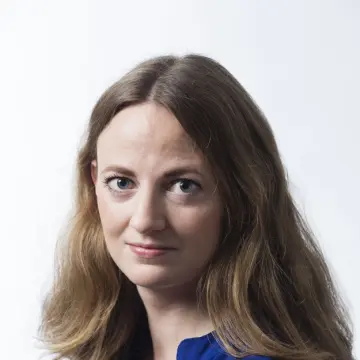
"I believe the peacebuilding community have made a fundamental category error over the past 20 to 30 years. We mistook truly complex problems for merely complicated ones," says Cedric de Coning.
He is a researcher at the Norwegian Institute of International Affairs (NUPI).
"The mistake we have made is to assume that peace is a problem that can be solved. We believed that peacebuilding and development experts have the agency to diagnose a conflict in a way that can identify a specific problem that needs to be solved,” he says.
"Not like fixing a car"
According to the researcher, however, this has not worked well enough:
"When our interventions have not resolved the conflicts in Afghanistan, Mali, the Democratic Republic of the Congo, South Sudan, or Yemen, to name a few examples, we have tended to blame a lack of data, poor analysis, bad leadership, insufficient political will, poor coordination, corruption, or spoilers such as armed groups," he explains.
All these problems matter, de Coning stresses. But he believes it is even more important to revisit the basic assumptions underlying peacebuilding.
"We have approached societies affected by conflict as if they were a machine we can fix, or a patient we can heal," he says.
He goes on to explain that social conflicts follow neither a straight line nor a predictable pattern. They cannot be fixed in the same way that you repair a car or a bridge.
"Problems where people, societies, and their environment affect each other are complex. Not just as a metaphor, but according to the scientific criteria that we use to identify complex systems. They are highly dynamic and non-linear, and they are self-organising, emergent, and adaptive," de Coning explains.
This makes such conflicts both uncertain and unpredictable.
"It's not possible to design a solution and know with sufficient confidence what the effects of such a project will be before we have implemented it," he says.
"Dramatic failure"
Earlier research shows that there is a link between whether peacebuilding efforts are tailored to the specific context of a conflict and whether the outcome actually results in lasting peace.
In the new book, the researchers turn earlier findings into practical advice for peacebuilders and aid workers.
De Coning developed the concept of adaptive peacebuilding. He draws on decades of relevant experience, both as a researcher and working on the ground. He is a former South African diplomat and has served as a UN peacekeeper.
So why is this book needed now?
"After the dramatic failure of the international intervention in Afghanistan and the coups in Mali, Burkina Faso, and Niger in the Sahel, the international peacebuilding and development community is rethinking the role and effectiveness of peacebuilding and development assistance more broadly," he says.
De Coning explains that the current debate in Norway about the future of development aid is part of this wider trend.
Saying farewell to old models
Against this backdrop, adaptive peacebuilding offers a new approach.
It is designed to deal with the uncertainty that always comes with supporting complex transitions from conflict to peace.
De Coning explains that the understanding of the conflict is built from the bottom up. It is built on what is actually observed. Peace is allowed to emerge gradually.
"Peacebuilders and the people affected by conflict work together to strengthen resilience and sustain peace through a process of learning from doing. In this way, peace emerges from practice and experience," he says.
This means saying farewell to a model of peacebuilding built on pre-planned, donor-funded projects where experts analyse the conflict, design solutions, and implement them in consultation with local communities.
Adaptive peacebuilding, on the other hand, is a continuously evolving process. Local communities have the leading role and are in control. Professional peacebuilders provide technical support, facilitation, and resources.
"As such, it's a radical shift away from the prescriptive peacebuilding approaches of the past 20 to 30 years," he says.
Must not interfere too much
An increasing number of organisations are adopting adaptive approaches. The new book includes case studies from the Norwegian Agency for Development Cooperation (Norad), the Swedish Agency for Peace and Development (Folke Bernadotte Acadamy), the UN Peacebuilding Fund, and the Japan International Cooperation Agency (JICA).
"Overall, however, donors and parliaments want the assurance that the funds they invest in peace and development will be used in ways that are effective. This is an absolutely reasonable expectation. However, in the past it incentivised a system where those working in the field had to design projects that had predetermined outcomes and causal paths, in order for them to receive funding," the researcher says.
When asked about the single most important change peacebuilders need to make, de Coning is clear:
"The key mindset change that's needed is for peacebuilders to grasp that for peace to be sustainable, it needs to emerge from within the lived experience of societies themselves. Peacebuilders can support that process, but if they interfere too much, they actually disrupt the opportunity for these communities to develop their own social institutions that are needed to sustain peace."
The change, then, concerns where the capacity and responsibility for creating lasting peace reside. Closely linked is the understanding that peace cannot be designed and implemented according to a predetermined blueprint. It has to emerge from an adaptive process in which people learn from experience.
References:
De Coning et al. Adaptive Peacebuilding: A New Approach to Sustaining Peace in the 21st Century, Palgrave Macmillan, 2023. DOI: 10.1007/978-3-031-18219-8
De Coning et al. The Adaptive Peacebuilding Guidebook (PDF), NUPI, 2026. ISBN: 978-4-86357-124-2

This content is paid for and presented by NUPI
This content is created by NUPI's communication staff, who use this platform to communicate science and share results from research with the public. The Noprwegian Institute of International Affairs is one of more than 80 owners of ScienceNorway.no. Read more here.
More content from NUPI:
-
The war in Ukraine: "France and the UK clearly stand out"
-
How Iran’s regime exploits emotions to crush protests
-
Improving the impact of the UN Peacebuilding Commission
-
Controversial calories: How do we measure hunger?
-
How Norway and the EU can collaborate in the minerals and battery sector
-
Nigerian authorities plan to close refugee camps housing a million people


