






THIS CONTENT IS BROUGHT TO YOU BY the Norwegian University of Life Sciences (NMBU) - read more
Does Norway really need more cabins?
A researcher says discussions often focus on making new developments more sustainable, rather than questioning whether more building is needed at all.
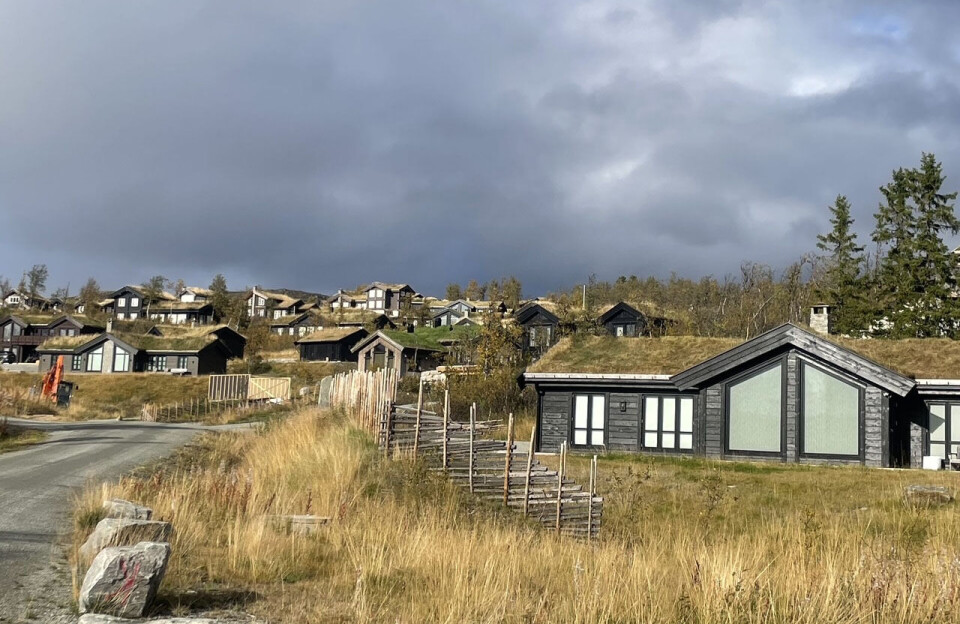
Norwegians love cabins.
They build cabins to be closer to nature. But the cabins themselves are transforming the very landscapes people come to enjoy.
In 2025 alone, almost 3,000 new holiday homes were built in Norway, according to Statistics Norway.
At the beginning of that year, the country had around 484,000 buildings used as holiday homes.
Simple living and outdoor recreation
Traditionally associated with simple living and outdoor recreation, Norwegian cabins have increasingly become larger, more comfortable second homes. They now often have facilities accosiated with permanent housing.
But new cabin developments bring roads, electricity, water and sewage infrastructure.
Forests, wetlands, and mountain landscapes give way to construction. The combined environmental impact can be considerable and difficult to reverse, according to researchers.
Environmental concerns
Carmen Mapis is a planning researcher at the Norwegian University of Life Sciences (NMBU).
She investigated how environmental concerns influence decisions about cabin development in three mountain municipalities in Eastern Norway: Krødsherad, Sigdal, and Øystre Slidre.
She found that environmental concerns rarely determine whether new cabin developments should go ahead.
"We often discuss how to make new developments more sustainable, but we rarely ask whether continued expansion is sustainable in the first place," says Mapis.
Greener cabins but continued expansion
Building cabins closer together, improving infrastructure, and reducing the environmental impact of each development are often presented as more sustainable solutions.
While these measures can reduce certain impacts, Mapis found that they rarely limit further development or fully address the combined effects on nature.
“Environmental sustainability is interpreted differently by those with different interests. Measures presented as protecting nature can also be used to justify further construction,” says Mapis.
As a result, environmental concerns often shape where and how cabins are built, rather than whether they should be built at all.

Who shapes the decisions?
Mapis found that power relations play an important role in determining which interests carry the most weight in municipal planning.
Developers, landowners, and political interests that favour economic growth often have greater influence over planning decisions than environmental authorities and those advocating stronger protection of nature.
Municipalities have the authority to approve or reject development plans. But in practice, many zoning proposals come from private developers or landowners.
This means that municipalities often respond to plans proposed by others, rather than deciding from the start where and how development should take place.
Economic pressure to keep building
Cabin development can bring important economic benefits to rural communities. Building new cabins generates work for construction companies and contractors, while cabin owners bring customers to local shops, restaurants, and other businesses.
For mountain municipalities that rely on this economic activity, restricting further development can be difficult, even when they recognise the environmental consequences.
Mapis found that alternatives to continued expansion were often regarded as politically or economically unrealistic.
However, Mapis also found examples where environmental concerns have led to substantial restrictions on cabin development.
In Sigdal, for example, objections from state authorities led to smaller development areas, fewer cabins, and stronger protection of wild reindeer migration routes, agricultural land, and mountain areas above the treeline.
In Øystre Slidre, environmental concerns helped remove around 3,000 decares of land previously set aside for cabin development. The municipality also introduced restrictions on new cabins in mountain and summer-farming areas.
Even so, these restrictions did not fundamentally change the municipalities' wider ambitions for continued development and growth.
Need to set limits
The research points to several ways municipalities can better protect nature. These include setting clearer restrictions on development, paying more attention to the combined impacts of cabin construction, and improving cooperation between local, regional, and national authorities.
Mapis also highlights the need to review land already set aside for development and to explore alternatives to continued expansion.
For Mapis, the key question is not simply whether cabins can be built in ways that minimise their impact on nature. It is whether yet more development in Norway’s cherished areas of natural beauty should take place at all.
Source:
Mapis, C.B.M. Environmental Sustainability in Municipal Second Homes Planning in Eastern Norway: A Study of Meaning, Power and Utopia. Doctoral thesis at NMBU. 2026. (About the thesis)

More content from NMBU:
-
Life in the city can be dangerous for these birds of prey
-
If rich countries work less, who picks up the slack?
-
This plant doesn't tolerate radiation very well
-
The water temperature salmon experience as embryos can shape their future health
-
Green school surroundings matter most in these neighbourhoods
-
How Kilimanjaro changed the lives of Norwegians with substance use problems


