






THIS CONTENT IS BROUGHT TO YOU BY the University of Bergen - read more
Your rain gauge could help improve weather forecasts
Observations from people's gardens have already helped one researcher.

Published
A simple thermometer outside the window and a barometer in the living room used to be all a home needed.
These days, advanced weather stations pop up in gardens and on balconies. They measure the local temperature, pressure, wind, and rainfall.
For the owners, such observations are fun to follow. For those hoping for better weather forecasts, they are a treasure.
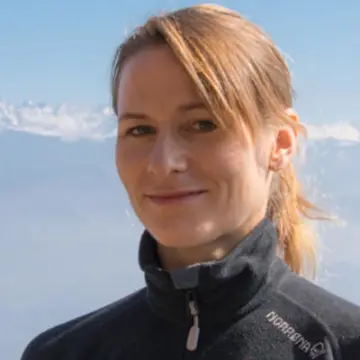
Marie Pontoppidan, a researcher at NORCE and the Bjerknes Centre for Climate Research, is working on improving the computer models that are used in weather and climate predictions.
"Precipitation can be very local"
In a recent study, Pontoppidan and colleagues from NTNU, NINA, and the University of Warsaw used data from privately owned rain gauges to complete the picture given by official weather stations.
With a more detailed overview of the weather that actually occurred, they were able to test how well weather forecasting models represent the real world.
“Precipitation can be very local,” she says.
A heavy shower in Bergen in 2023 confirmed this completely.

Much wetter than officially measured
Norway has around one thousand official weather stations, approved and run by the Norwegian Meteorological Institute.
The stations are located around the country, ensuring a good overview. But the distance between neighboring stations can be large.
One thousand stations may sound like a lot, but with a terrain made up of fjords, mountains, and valleys, it is not enough to cover the locally varying weather.
Weather stations set up in people's gardens may catch variations that would otherwise go unnoticed.
During a heavy rain shower in August 2023, a privately owned weather station in Fyllingsdalen, southwest of the city centre of Bergen, received almost 60 millimetres of precipitation in less than an hour.
The weather forecast missed the mark
None of the Meteorological Institute's 14 rain gauges in the Bergen area recorded even half of that amount.
“But we have radar data confirming the observation,” says Pontoppidan.
Even when weather conditions are favourable for rain showers across an entire region, each individual rain cloud only drops rain over a limited area. The difference can be significant just one kilometere away.
The fact that showers fall so locally also makes it hard to predict the outcome.
That August day in 2023, warnings of heavy rainfall had been issued for the internal parts of Rogaland, but the rain turned out to be heavier farther north.
Measurements are becoming more and more detailed
Technological developments in recent decades have changed both the format and the accuracy of weather forecasts.
Rain, temperature, and wind in Norway are displayed with more and more detail, like an image with increasingly higher resolution.
Weather prediction models place a grid over the map and calculate the weather in each grid cell. The size of the grid cells in the model currently used for ordinary weather forecasts, is 2.5 kilometres.
In the models Marie Pontoppidan and her colleagues use for research, there may be as little as one kilometre between each point where the weather is estimated.
Private garden stations fill the gap
The disadvantage of increasingly detailed models is that they have surpassed the observations. The picture given by official weather stations is too coarse to compare with the model.
As a result, researchers cannot properly check how well the fine-meshed model-generated image resembles the weather that really occurred.
That is why Marie Pontoppidan is researching the possibility of using weather stations from people's gardens to fill the gaps between official measuring sites.
“The weather stations are not free. But they are already out there. So many people have already bought such stations. It would be too bad not to use the data, provided they are good enough,” says Pontoppidan.
Researchers handed out weather stations
In collaboration with the municipality of Sunnfjord, people living in the flood-exposed valley Viksdalen were given weather stations to place at home. Stations were also handed out in the municipalities of Kinn and Osterøy.
“Many people were highly motivated,” says Pontoppidan.
She explains that an area must have a certain number of stations for the observations from there to be usable.
The garden stations are simpler than the official ones, with poorer wind screening, which means raindrops can blow past or bounce out of the gauge during heavy rainfall.
For quality assurance, observations must be compared with data from other nearby stations. If major deviations are found at a station, its data will not be included in the analysis.
So far, combining rain registered in people's gardens with official data is on the research stage. Temperatures measured at private weather stations are already included in the Meteorological Institute's weather prediction system.
From gardens to cabins
On the August day when it rained so heavily, Pontoppidan and her colleagues received data from 62 private weather stations in Bergen. Would it help to set up even more?
“The more, the better. But I would rather see new stations in sparsely populated regions, or even better, at people's cabins in the mountains,” says the rain researcher.
In the coming years, Marie Pontoppidan will be involved in the newly established Centre for Mountains in Transitions.
Though her work will include making her own observations of rainfall, she will appreciate data from private weather stations.
Reference:
Pontoppidan et al. Demonstrating the Added Value of Crowdsourced Rainfall Data in Complex Terrain, Meteorological Applications, 2025. DOI: 10.1002/met.70108

This content is paid for and presented by the University of Bergen
This content is created by the University of Bergen's communication staff, who use this platform to communicate science and share results from research with the public. The University of Bergen is one of more than 80 owners of ScienceNorway.no. Read more here.
More content from the University of Bergen:
-
What zombies can teach us about how epidemics spread
-
Is political polarisation dangerous? A new study provides clearer answers
-
The oldest water in the Arctic Ocean has been there for several hundred years
-
Researcher discovered that migrants lived more stable lives in the USA than in Norway
-
A brutal field trip gave researchers new insight into Arctic winters
-
How one genetic error can affect both the heart and the brain


