






THIS CONTENT IS BROUGHT TO YOU BY the University of Bergen - read more
The oldest water in the Arctic Ocean has been there for several hundred years
How the Gulf Stream could be affected by what happens in the Arctic Ocean.

Published
To predict how ocean currents in the Atlantic Ocean may develop, researchers need to know what drives them. The hunt for driving forces has led researchers to follow the warm water from the Gulf Stream as far north as it can go.
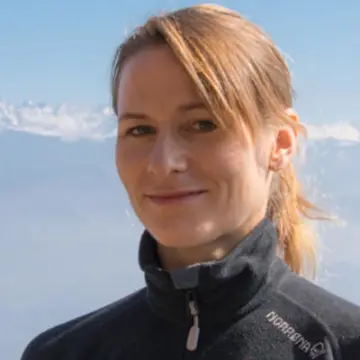
In a new study, Jakob Dörr and his colleagues looked into what happens to water that flows from the Atlantic Ocean into the Arctic Ocean.
Changes in ice conditions there may help limit the reductions in ocean currents farther south.

Could climate change weaken the Gulf Stream?
The Gulf Stream is part of a larger system of currents known as the Atlantic Meridional Overturning Circulation (AMOC).
The word overturning refers to water being transported vertically as well as horizontally, like a loop or conveyor belt between the ocean surface and the deep sea.
Whether climate change may reduce the Gulf Stream has been a recurring topic in international news media.
The real question concerns possible changes in the overturning circulation in the Atlantic – not one single surface current, but the entire loop.
The overturning works by winds driving warm surface water northwards. The water then cools, becomes denser, and sinks. From there, it flows back south at depth.
In some regions, the water becomes denser as salt is released when seawater freezes. But cooling is the key process that causes the water to sink.
With climate change, the water in the northern regions will cool less, while more meltwater and precipitation make the sea less salty. Both these factors make the water less dense, reducing the sinking that contributes to keeping the loop going.
If less water returns southwards in the deep ocean, this will in turn affect the flow of warm water from the Gulf of Mexico across the Atlantic Ocean towards Northern Europe and Norway.
North, farther north, and even farther north
The future of the Gulf Stream therefore depends on climate change in the north. But where exactly is north?
In reality, the currents in the Atlantic Ocean do not follow a single loop, but spread like a blood stream with many branches. North can designate many locations along these branches, but some regions are more important than others.
Originally, it was thought that most water would sink in the Labrador Sea. Later, the Northern Seas were found to be just as important. In recent years, researchers like Jakob Dörr have looked even farther north: at the Arctic Ocean.
Shrinking ice may counteract a weakening of currents
Theory and climate models suggest that the Atlantic Meridional Overturning Circulation will be reduced in the future, and the Norwegian Sea is one of the regions that will contribute less to maintaining it.
Whether Norway will receive less heat from the south is less clear.
New regions may take over some of the role that the Norwegian Sea and other cooling regions have played.
One hypothesis is that decreasing sea ice in the Arctic Ocean may open up new regions where water can sink, and thus counteract some of the weakening of the overturning circulation.
“I think it potentially can make a difference for what we will see in Norway, essentially, anything north of Iceland,” says Jakob Dörr, though he notes that the final result is uncertain.
“We now so little about the Arctic Ocean. There are very few observations of the deep Arctic,” he adds.
To be able to follow the movement of water into and out of the Arctic Ocean, Jakob Dörr and his colleagues have used a computer model to simulate the ocean currents. They examined present-day conditions, providing the knowledge needed to assess what may happen in the future.
Water sinks in the Arctic Ocean
Water from the Gulf Stream enters the Nordic seas from the Atlantic between Iceland, Scotland, and the Faroe Islands. The warm water follows the Norwegian coast northwards before splitting into two branches.
One branch follows the western side of Spitsbergen and enters the Arctic Ocean through the Fram Strait. The other turns eastwards through the Barents Sea, reaching the main Arctic basin east of Franz Josef Land.
The Arctic Ocean can be defined in different ways, and in the new study the Barents Sea is included along with the Arctic Basin itself.

In the main basin, near Franz Josef Land, water from the two branches meet again, completing a round before flowing out through the Fram Strait and along the east coast of Greenland. But before meeting, each branch has undergone significant changes.
While some water remains near the surface, the rest has cooled and sunk to become deep water. Because deep water from the Arctic Ocean contributes to maintaining the Atlantic Meridional Overturning Circulation, it has been particularly important for the researchers to get an overview of how much deep water is produced.
Jakob Dörr and his colleagues found that about one third of the Atlantic water that enters the Arctic Ocean is transformed into deep water. Most of this water comes from the branch through the Barents Sea.
Ice-free waters open for cooling
“I like to talk about the cooling machine in the Barents Sea,” says Dörr.
In the Barents Sea, surface waters cool efficiently. The main reason is that this sea is shallow and remains largely ice-free, even during winter.
While crossing the shelf, the water loses enormous amounts of heat to the cold Arctic air above. The water gets colder and denser. When reaching the deep Arctic basin, it's dense enough to slide far down the continental slope.
The other branch, entering through Fram Strait, meets the ice edge just north of Svalbard. Some deep water is formed before reaching the edge, but after that, the process stops. The water continues its journey below the ice, isolated from the cold air above, and no more cooling occurs.
Inside the Arctic Ocean, both branches follow the underwater topography in a counterclockwise direction. But the water from the Barents Sea has become much denser and flows below the water from the Fram Strait. As the water reaches the Fram Strait on its way out, both surface water and deep water flow into the Greenland Sea.
About three-quarters of the deep water is formed by the cooling and sinking of surface waters. The rest has been formed because some water from the Fram Strait branch has mixed with denser water from the Barents Sea.

Quiet beneath the ice
“The oldest water in the depth of the Arctic Ocean has been there for several hundred years. The Arctic Ocean is a quiet ocean,” says Dörr.
Even higher up in the water column, there seems to be little urgency. Most of the water spends several decades travelling through the polar basin.
The oceanographer says he is nevertheless surprised by how little the water changes once it has begun circling the basin.
Rain and meltwater make the upper layers fresher, while water in regions where ice freezes – the shelf seas along the coast – becomes saltier. But apart from the mixing of water from the two branches, none of these processes plays a major role in the production of deep water.
Most of the important processes occur in the Barents Sea.

The uncertain outcome of more open water
“Now that we know the importance of the different regions, we can start to think about what happens when the Atlantic gets warmer and the sea ice edge retreats further,” says Dörr.
As the ice withdraws, new regions of open waters could open for sinking and the formation of deep water. Can we expect such an expansion if the southern regions also become much warmer?
“It might be that the region of deep water formation in the Barents Sea will just move northwards,” says Dörr.
No one knows what could happen when the ice edge withdraws even farther north, out of the Barents Sea and into the polar basin.
References:
Dörr et al. The Arctic overturning circulation: transformations, pathways and timescales, Ocean Science, 2026. DOI: 10.5194/os-22-565-2026
Årthun et al. Atlantification drives recent strengthening of the Arctic overturning circulation, Science Advances, 2025. DOI: 10.1126/sciadv.adu1794

This content is paid for and presented by the University of Bergen
This content is created by the University of Bergen's communication staff, who use this platform to communicate science and share results from research with the public. The University of Bergen is one of more than 80 owners of ScienceNorway.no. Read more here.
More content from the University of Bergen:
-
What zombies can teach us about how epidemics spread
-
Is political polarisation dangerous? A new study provides clearer answers
-
Researcher discovered that migrants lived more stable lives in the USA than in Norway
-
A brutal field trip gave researchers new insight into Arctic winters
-
Your rain gauge could help improve weather forecasts
-
How one genetic error can affect both the heart and the brain


